
What You Actually Do
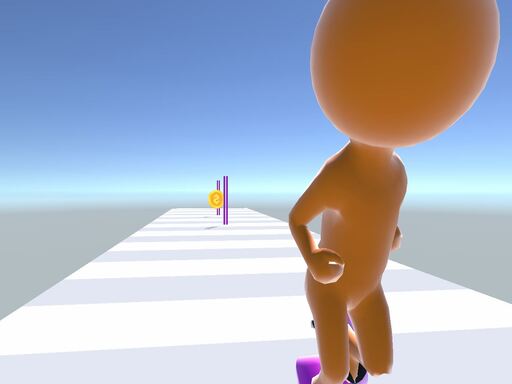
In Stickman Sprint Arcade, you control a stickman runner with one goal: reach the finish line without crashing. Each course throws obstacles that demand either a jump or a slide. Tap or click to jump over gaps and low barriers; slide under high barriers. The controls are deliberately minimal, so your attention stays on timing rather than button combinations. Every run is short, but the input response feels immediate, which matters when a single mistimed jump ends your attempt.
Power-Ups and Risk Decisions
Speed boosts and shields appear on the course, and grabbing them changes how you approach the next section. A boost can carry you through a stretch that would otherwise require a precise jump, but it also compresses your reaction window. Shields let you survive one mistake, which encourages riskier movement. Collecting these items is optional, but ignoring them often makes later obstacles harder to clear. The game gives you a clear feedback loop: grab a power-up, then adjust your rhythm for the next few seconds.
How Difficulty Progresses
Courses are built around a simple difficulty curve. Early sections introduce one obstacle type at a time, letting you learn the jump and slide timing separately. Later, obstacles combine—a gap followed immediately by a low barrier, or a slide that leads straight into a jump. The stickman's simple silhouette makes it easy to track your position on screen, which helps when the pace increases. There are no complex level mechanics to memorize; instead, the challenge comes from reading patterns faster and reacting without hesitation.
Who This Suits
Stickman Sprint Arcade fits players who want a reflex-driven arcade game they can start in seconds. A run takes little time, so it works for short breaks, but the progressive difficulty also supports longer sessions if you keep retrying. The learning curve is gentle for beginners because the controls are intuitive, yet the later courses reward practice and anticipation. If you prefer games with deep customization or story, this one stays focused on timing and coordination instead.







Comments
0 comments