
A Single Platform, One Clear Goal
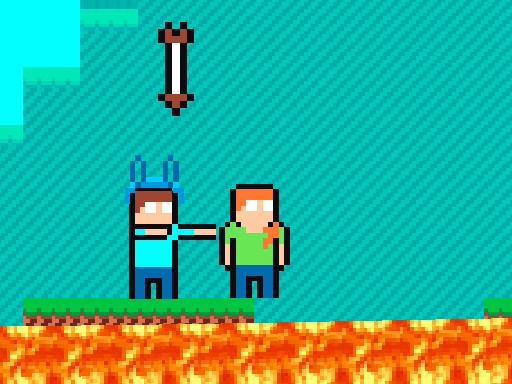
Pixel Climb Upward places two pixel characters on one platform suspended above a pool of molten lava. There are no checkpoints or side paths. The only objective is to remain on the platform while your opponent falls or gets hit by a rocket. That narrow focus is what makes each round tense: every step toward the edge is a risk, and every second near your rival is an opportunity to push them closer to the lava.
How Rockets Change the Round
Rockets drop from the sky at random intervals and random spots. Before impact, a shadow appears on the platform, giving players a brief warning. The shadow is the key information in the game. Ignoring it usually ends the round immediately, while reading it early creates space to keep moving and stay alive. Because rocket drops are random, no two rounds play out the same way, even on the same small platform.
Movement, Jumping, and Pushing
Each player controls one character using arrow keys or on-screen buttons. You can move left, right, and jump. Jumping helps you reposition quickly, but it also commits you to a landing spot, which matters when a rocket shadow appears nearby. The push mechanic is the other half of the game: by moving into your opponent, you can nudge them off balance. Positioning yourself between your rival and the edge is a simple but effective tactic, especially when a rocket is about to land.
Short Rounds, Low Barrier to Entry
Rounds end when a player falls into the lava or is hit by a rocket. That means a single mistake can decide the outcome, which keeps sessions fast and encourages repeated play. Controls take seconds to learn, but timing pushes, jumps, and rocket dodges takes practice. The bright pixel art and lack of inappropriate content make it suitable for children and adults playing together on the same device.








Comments
0 comments