
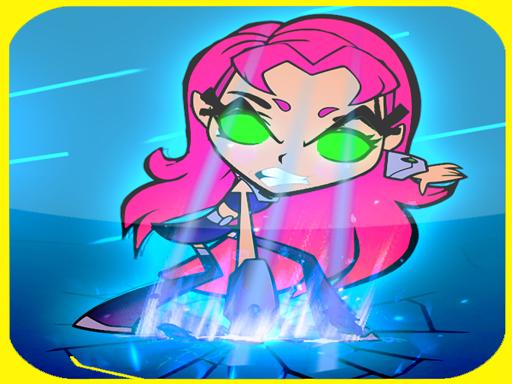
World Design and Visual Tone
Starlight Journey moves through five distinct environments: jungles, deserts, caves, floating sky islands, and mechanical factories. Each setting changes the visual backdrop and introduces different obstacle arrangements, which keeps level layouts from feeling interchangeable. The creatures Starlight meets are intentionally silly rather than threatening, and the bright color palette is calibrated to hold younger players' attention without overstimulation.

Core Movement and Scoring
Players control Starlight with simple on-screen buttons for running, jumping, and sliding. Coins and gold pieces scattered through each stage raise the score, while speed boosts temporarily increase movement pace. Because speed boosts make timing harder, collecting them involves a trade-off between higher scores and tighter control. The game rewards observation as much as reflexes: hidden items and optional challenges sit off the main path, so thorough exploration pays off.

End-of-World Encounters
Every world closes with a special challenge that demands precise timing and deliberate movement rather than constant forward running. These sections function as skill checks for the jump-and-slide mechanics practiced earlier in the stage. Players who rush through the main path often struggle here, while those who have experimented with obstacle patterns tend to read the challenge more clearly.

Accessibility and Approach
The control scheme is deliberately minimal, so children can start playing without adult assistance. There is no download or installation step, which means families can begin a session immediately in a browser. The design prioritizes coordination practice and light problem-solving over competition, making it suitable for short play sessions or shared family screen time.


Comments
0 comments