
Merging Tile Logic with Forward Motion
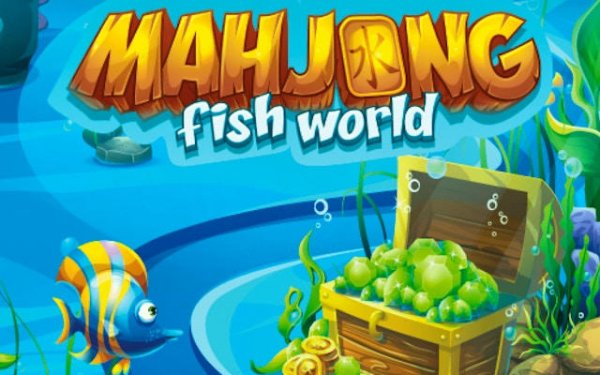
Ocean Mahjong Puzzle Runner places a fish under the player's control, swimming through underwater environments toward a board of Mahjong tiles. The objective is straightforward: clear each board to advance. Standard Mahjong matching rules apply — tiles are removable only when they are free, meaning no other tile blocks their left or right side. This constraint forces players to assess the board layout before tapping, since clearing the wrong pair can lock up remaining matches. [IMG_1]
Reactive Hazards and Star Collection
While the tile board demands careful planning, the space around it does not stay still. Sharks and jellyfish drift through levels as moving obstacles. Players swipe or tap to dodge them while continuing to match tiles, splitting attention between two very different tasks. Stars scattered across each level serve as an optional scoring layer — grabbing them boosts the final score, but chasing them can pull focus away from the board. [IMG_2]
Progression and Leaderboard Competition
Difficulty rises as players advance, with tile layouts and obstacle patterns growing more demanding. The game tracks scores on global leaderboards, letting players compare their results with friends and other players worldwide. That social layer gives star collection and efficient board clearing a competitive purpose beyond simply finishing a stage. [IMG_3]
Approaching Each Board
Clearing the most obstructed tiles first tends to open up the board and create new matching opportunities. Scanning ahead for pairs before tapping reduces wasted moves. Because obstacles keep moving, staying aware of their timing matters as much as reading the tile layout. Rushing usually leads to mistakes, while steady pattern recognition improves with repeated play. [IMG_4]










Comments
0 comments