
Two Siblings, One Escape Plan
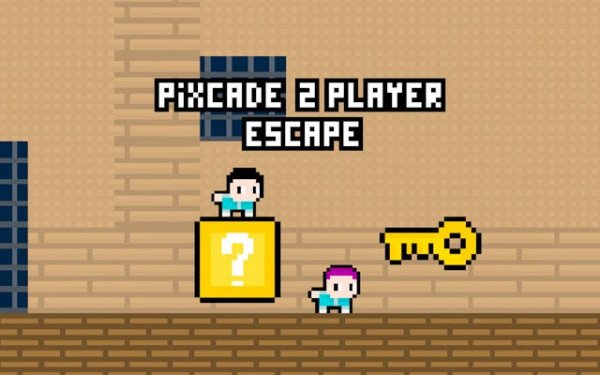
Pixcade Co-op Puzzle Escape casts two players as siblings trapped inside a mysterious house. The exit stays locked until both hidden keys are found and every coin in the rooms is collected. Neither character can finish the job alone, so the game builds its challenge around shared discovery rather than solo skill. Each room asks the pair to split their attention between searching for items and watching each other's position.
Controls and Movement
Each sibling runs on separate keyboard controls. Player one uses WASD; player two uses the Arrow keys. A double-jump lets both characters reach high platforms and clear gaps that a single jump cannot. Because the controls are split across one keyboard, the two players sit side by side, which keeps communication immediate and physical. The layout is simple enough for newcomers but still demands timing when both characters need to jump in sequence.
Why Proximity Matters
Staying near your partner is not just good advice; it is a rule of the design. Certain doors and obstacles only respond when both siblings are close, so wandering off to explore alone can stall progress. This forces a constant negotiation: one player may spot a coin across the room, but the other cannot follow without risking the pair's position. The tension between exploring thoroughly and staying together is the core puzzle of every room.
Short Sessions, Shared Focus
Rooms are built for brief play sessions, which suits families and friends who want a cooperative activity without a long commitment. The objectives are clear from the start, so players spend their time searching and coordinating rather than reading instructions. Patience matters more than reflexes here; rushing ahead usually means missing a coin or breaking the proximity needed to open the next area. The result is a lighthearted but deliberate test of teamwork.







Comments
0 comments