
Hexagonal Tile Strategy Puzzle
Review
This game stands out by replacing the usual square grid with a hexagonal board, which genuinely changes how you think about matches. The lack of a timer makes it perfect for unwinding, yet the level objectives provide enough structure to keep you engaged. Obstacle tiles add variety without feeling unfair. It is a well-crafted puzzle experience that respects your time and intelligence.
About This Game
Board Design & Movement
Unlike traditional square grids, this game uses a honeycomb layout where each tile touches six neighbors. This structure increases the number of possible match directions, including diagonal alignments. Players select one tile and then an adjacent one to swap positions. When three or more identical pieces connect in a straight line, they vanish from the board. New blocks drop down to fill gaps, often creating cascading clears that add bonus points. The hexagonal arrangement demands more spatial awareness than standard match-3 games, as potential matches can form along multiple axes.
Level Structure & Objectives
Each stage comes with a specific goal that must be reached to progress. Some levels require reaching a point threshold within a limited number of swaps. Others ask players to remove all special obstacle tiles that cannot be moved directly. These obstacles might be locked blocks or immovable stones that only clear when adjacent matches occur. As players advance, objectives become more varied, requiring different strategies. Early levels introduce basic mechanics, while later ones combine multiple challenges, such as clearing obstacles while also hitting a score target.
Strategic Thinking Over Speed
There is no timer counting down, so each move can be considered carefully. This design encourages thoughtful analysis rather than quick reactions. Players can scan the entire board to identify potential chain reactions before committing to a swap. Prioritizing matches near the center often opens up more opportunities, as clearing central tiles affects surrounding pieces. The game rewards players who plan several steps ahead, anticipating how new tiles will fall and what matches they might create. This slower pace makes the experience accessible to casual players while still offering depth for those who enjoy optimization.
Visual Style & Accessibility
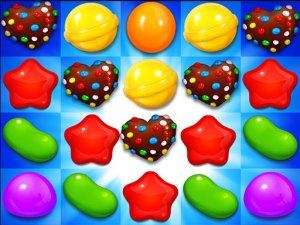
The interface uses bright, distinct colors for each tile type, making them easy to distinguish at a glance. Animations are smooth but not distracting, with clear feedback when matches occur and points are added. Controls work equally well with mouse clicks or touch taps, allowing play on desktop computers, tablets, and phones. The family-friendly presentation avoids any violent or mature themes, focusing purely on the puzzle challenge. No in-app purchases or advertisements interrupt gameplay, providing an uninterrupted experience.



































💬 Comments
0 comments