
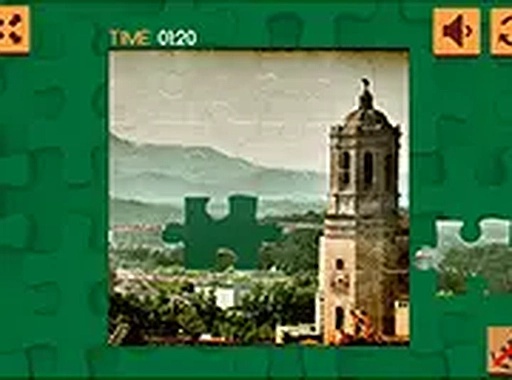
Core Concept & Visual Theme
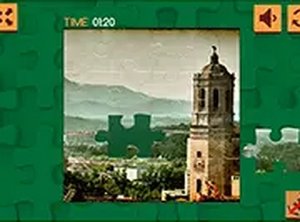
This browser-based puzzle presents players with a collection of fragmented images depicting various Spanish scenes. The objective is straightforward: rearrange the scattered pieces to reconstruct the original photograph. The visual content focuses on the country's natural and architectural beauty, including coastal vistas, mountain ranges, historic cityscapes, and cultural monuments. Each completed puzzle reveals a high-quality image, turning the solving process into a mini virtual excursion. The selection of images appears to rotate or expand, offering variety over multiple sessions. The core appeal lies in combining a simple, satisfying mechanical task with exposure to appealing geography.
Difficulty Customization & Accessibility
Players can select from several piece counts, typically including options like 16, 36, and 64 pieces. This range accommodates different skill levels and available time. The lower count works well for a quick, relaxing break, while the higher count provides a more sustained challenge. The interface is designed for straightforward interaction, responding to mouse clicks on desktop computers and touch inputs on mobile devices. A full-screen mode is available to minimize distractions, and the game runs directly in a web browser without requiring any downloads or installations. This makes it easy to start a puzzle on one device and continue on another.
Pacing & Player Experience
There are no timers, scoring systems, or penalties for taking too long. This absence of pressure is a defining characteristic, allowing players to work at their own rhythm. The experience is intended to be meditative and stress-reducing, focusing on the process rather than competition. Players can pause or stop at any point, with progress presumably saved locally. The lack of time constraints also makes the game suitable for players of all ages, including younger children who may need more time to match pieces. The calm pacing encourages careful observation and methodical thinking.
Strategic Approaches for Completion
While there is no single correct method, experienced puzzle solvers often employ a few basic strategies. Starting with the edge pieces to establish the border is a common first step. Grouping pieces by dominant colors or recognizable patterns, such as blue for sky or green for vegetation, can simplify the matching process. For images with distinct landmarks, focusing on those unique elements first can provide anchor points. Taking occasional breaks can help maintain a fresh perspective, especially on larger puzzles. Regular practice tends to improve pattern recognition and spatial reasoning over time.
Family-Friendly & Educational Value
The content is designed to be appropriate for all audiences, with no violent, mature, or disturbing imagery. The puzzles depict real-world locations, offering a subtle educational component by familiarizing players with Spanish geography and architecture. This can spark curiosity about the places shown, potentially leading to further research or travel interest. The activity also supports cognitive skills such as visual memory, attention to detail, and problem-solving in a low-stakes environment. For families, it can serve as a shared activity that encourages cooperation and discussion about the images.



Comments
0 comments